
Originally published by the Boston Globe on 6/8/2026
Colette holds all the institutional knowledge at all-day rotisserie cafe Shy Bird in Kendall Square, Fenway, and South Boston. She knows what ingredients can be substituted when there’s an allergy, what supplies have gotten more expensive over the years, and how to appease a disgruntled guest.
But Colette is not a kindly industry vet doling out advice on her smoke break. She, or it, is an AI tool created by Shy Bird co-owner Eli Feldman. Two months after Feldman put the tool on the market, 40 restaurants around the country are using Colette.
The idea of AI in the restaurant industry may summon visions of robots behind the line or on the phone — as was the case with a pizza joint in Newmarket, N.H. AI has been blamed for culinary misinformation like the viral AI image of Barking Crab that falsely showed the Fort Point restaurant devastated after an imaginary storm.
Get Food & Dining Headlines
The Globe's most recent food stories, delivered to your inbox every Wednesday.
Enter EmailSign Up
Indeed, restaurant owners and diners around the country are skeptical about the role the technology could play in an industry based on intuition, creativity, and human connection. Even fast-food giant McDonald’s has faced intense backlash for airing an AI-generated Christmas commercial and for cutting cashier jobs in favor of electronic ordering.
But Feldman says Colette is meant to ease the time and labor burdens of backend work, not to replace employees or turn warm human hospitality cold.
“Outsourcing leadership inspiration and motivation to a machine is not a good idea,” Feldman said. “So how do you make the most of these tools to amplify the ability of the people in the restaurant?”
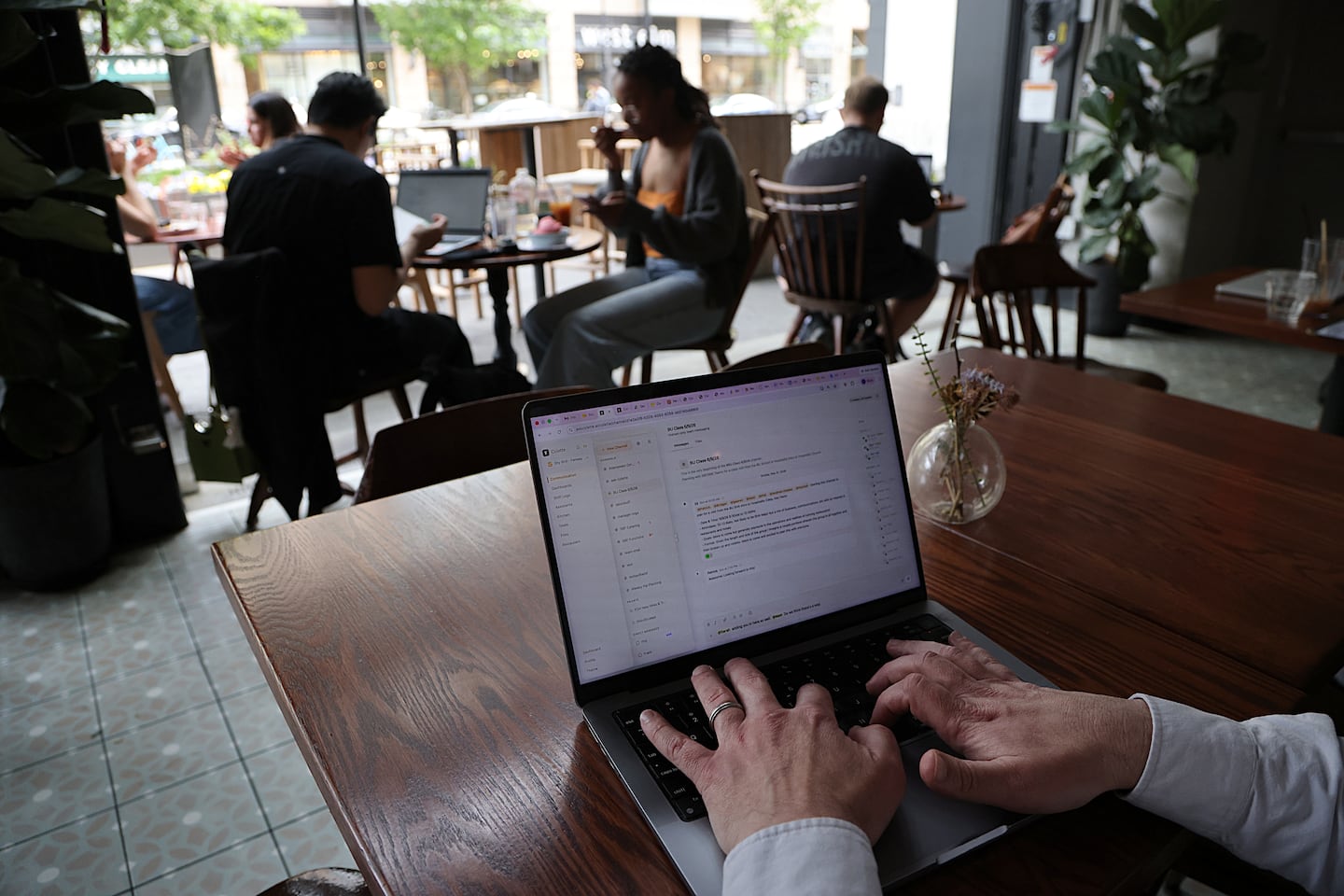
Many service-industry tools, like Boston-based Toast, a restaurant point-of-sale technology, have integrated AI into their platforms, but the AI only works within those closed systems. Colette is meant to gather information from multiple sources like Toast for sales numbers, OpenTable for reservations, and Bill.com for invoicing, then condense all of that data in one place.
For Shy Bird, Colette has also digested the employee handbook, materials from the restaurant’s third-party HR company, and write-ups of specific guest interactions and how they were handled. The tool pulls from this information, as well as data about ingredient costs, employee timecards, and best-selling menu items. At the moment, only managers at the restaurants use Colette.
The name, devised by Colette’s CEO, Frank Chen, alludes to Colette Tatou, the rotisseur and love interest in Disney’s “Ratatouille.”
“She [gave] tough love to Remy and Linguini,” said Feldman, adding that the character was “all business and perhaps the most competent person at Gusteau’s,” the movie’s fictional restaurant.
Colette has streamlined communication, said Sarah Gibbons, general manager of Shy Bird’s Kendall Square location, by taking multiple email and text chains and compiling them into the platform’s chat functionality, where managers can update each other on shift changes and flag problems like broken equipment. Gibbons said using the AI for backend paperwork has freed up more of her time to focus on guests and employees.
Shy Bird’s first major use of AI was investigating long turnaround times for brunch dishes at the Fenway location. Prior to Colette, Feldman uploaded to Claude photos of the kitchen, information about the menu, and what dishes were being ordered, then asked how the restaurant could streamline the process.
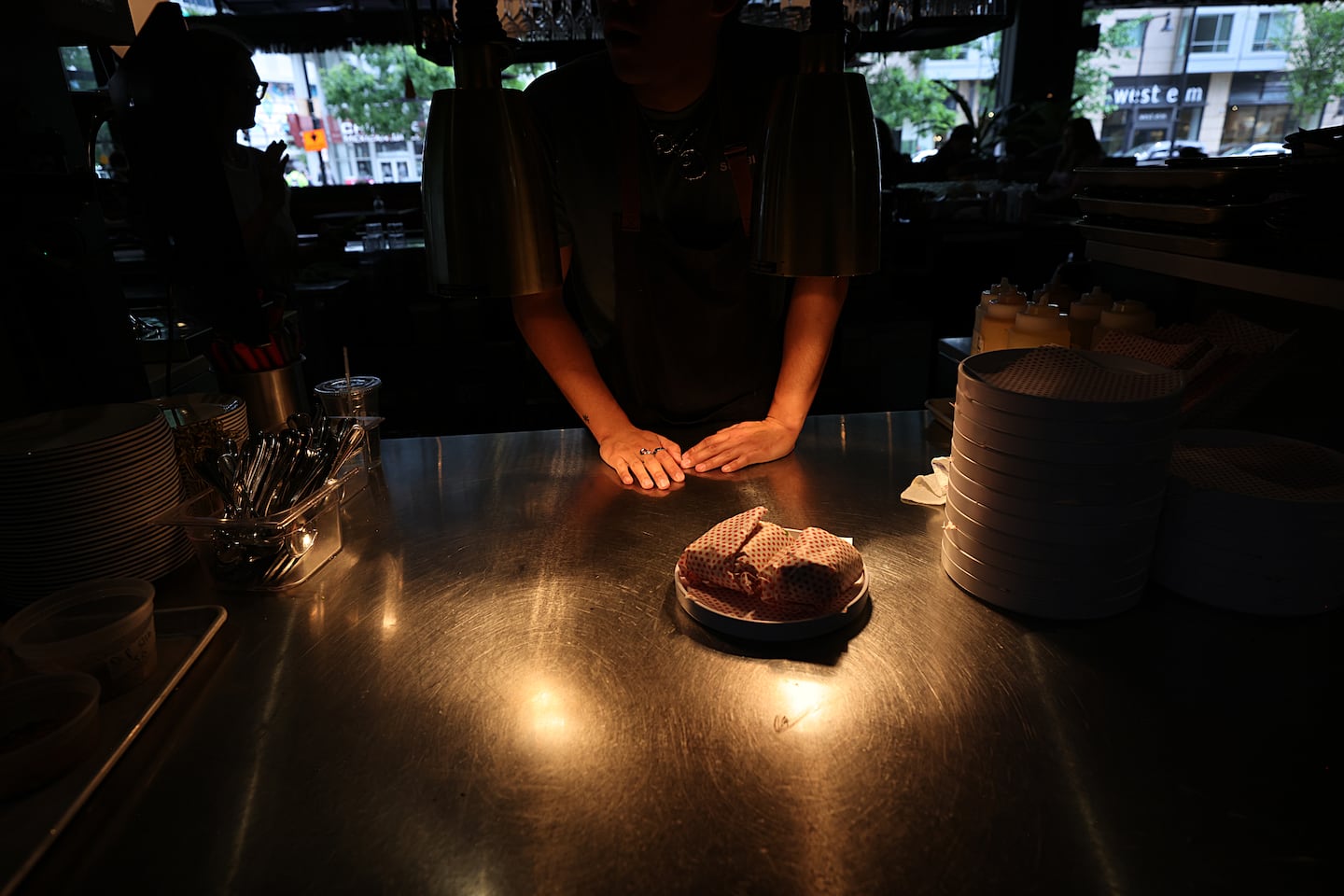
Claude recommended a list of changes, most of which Feldman did not consider usable. But it also suggested rearranging the kitchen stations to speed up assembly of the popular Calabrian fried chicken Caesar wrap and breakfast wrap. The kitchen grumbled, but director of operations Matt Virzi said turnaround time decreased by 30 percent for similar volume the next day.
Shy Bird isn’t the only Boston restaurant embracing AI. Lou Charbonneau, beverage director at Xenia Greek Hospitality, which runs restaurants including Kaia and Bar Vlaha, uses Midjourney, a generative AI tool, to design the intricate, bound book menus at the group’s witchy speakeasy Hecate. Those menus used to be designed by artists Katherine and Tim Tomkinson at PM Creative, who continue to work with the group on branding.
Advertisement
Nick Nixon, managing partner and culinary director at Broadway Restaurant Group, which owns Capo, Dalia, and other restaurants, uses ChatGPT in the kitchen to scale recipes and reduce waste.
“I realized how much it could help me on Thanksgiving morning,” said Nixon. “Thanksgiving at Capo is crazy busy, usually 700 reservations starting at noon and wrapping up around 9 p.m.” That means he has to scale recipes for turkey, stuffing, and demi-glace gravy by 700. ChatGPT took some of the guesswork out of that huge volume increase.
Nixon fed into the chatbot all the team’s historical data about food prep timelines and ingredient quantities. Then he asked how much more of each ingredient he would need to add 50 or 100 more covers. He says this year ChatGPT estimated perfectly, which kept him from over-ordering for fear of running out of food.
He also uses the chatbot to translate his preferred handwritten menu plans into a digital document and to assess cost per portion. Recently, as a result of that assessment, Nixon increased the portion size of the octopus at Dalia without raising its price.
Despite his enthusiasm for the technology, Feldman remains levelheaded about AI’s flaws.
“I really wanted to encourage our team to engage with these tools while also being incredibly conscious of the downside of them,” he said. “I think the way that you learn that effectively is to use them, but know that they’re not magic tricks, they will not solve all your problems, or even the majority of them.”
Although Feldman has been experimenting with AI for a couple years, the fully operational version of Colette debuted just over six weeks ago.
Advertisement
Currently 17 restaurants in Boston are using Colette, including SRV, a Venetian spot in the South End. Restaurants in Chicago, New York, Denver, Austin, and Portland, Maine, are also on board. Ted Hawkins, managing partner of SRV’s owner, the Coda Restaurant Group, uses Colette for the small computer tasks that add up throughout the day, like putting together a tip sheet and reconciling bank deposits.
The tool has allowed him “to take back the time that was spent in spreadsheets as much as we can,” Hawkins said, “and reinvest that time into what makes restaurants so special, which is the human connection, the hospitality, making great food.”
Last August, Feldman hosted a hackathon with 50 Boston restaurant operators including folks from Steel & Rye, Pagu, The Smoke Shop, and Jody Adams’s A Street Hospitality group. At the event, restaurateurs used AI to troubleshoot hot-button issues like rising food and labor costs. Though Feldman said no one arrived at any magic solutions, the turnout was proof that the local restaurant community is open to experimenting with AI.
For Feldman, advancing software like Colette isn’t just about embracing a trendy technology. It’s about preserving the restaurant industry as a whole.
“I really do believe this is the most important industry in the country. We employ one in 10 people,” said Feldman. “In order for the industry to carry the weight and do right by its people, we have to figure out how to make it more profitable,” not to benefit the owners but to ensure sustainable jobs.