
TL:DR:
- The pandemic wasn’t the disaster, it was the spark. Like Chicago’s wooden city in 1871, restaurants were already built to burn.
- The fuel piled up for over a decade: ecommerce hollowing out retail, the generations-old labor reckoning of Me Too, declining alcohol sales, relentless economic instability, and now GLP-1s shrinking appetites themselves.
- None of it read as a liability while it was working. It was just how restaurants ran, the same way wood was just how you built a city.
- The result is arithmetic. Margins eroded from 12-15 cents on the dollar to 3-5, and today 42% of full service restaurants are unprofitable.
- The fire and the river are two different problems. Chicago got to rebuild in steel before fixing its poisoned river. Restaurants don’t get that luxury.
- There’s nothing to rebuild with until the flow of profit reverses. For restaurants, fixing the river isn’t the second act, it’s the precondition.
- Where did the missing 10 cents go? It got claimed one rational decision at a time, by landlords, suppliers, cities, tech platforms, and diners, none of them villains.
- This is a tragedy of the commons. Everyone drawing from the shared viability of the industry, no one responsible for protecting it, all of them losing when it collapses.
- A penny back from five stakeholders only gets us halfway, and even that won’t be easy. It asks exhausted operators and comfortable incumbents to change behavior that currently makes perfect sense for each of them.
- But the status quo is the expensive option. An empty storefront is a landlord, a city, a supplier, and a software company all collecting nothing.
- Reverse the flow or the builders walk away. Ask exhausted operators to rebuild an industry that keeps draining them, and the only rational choice left is to leave. When they do, everyone loses.
Couple quick things before we start
- I consider this a companion piece to Deirdre Auld’s Corporate Slop Bowls article over on Dear Deirdre. I strongly encourage subscribing and giving that one a read.
- Two of my favorite Boston restaurants either closed or announced their closures in the last couple weeks and it prompted a lot of thinking that led me here.
Let’s get into it!
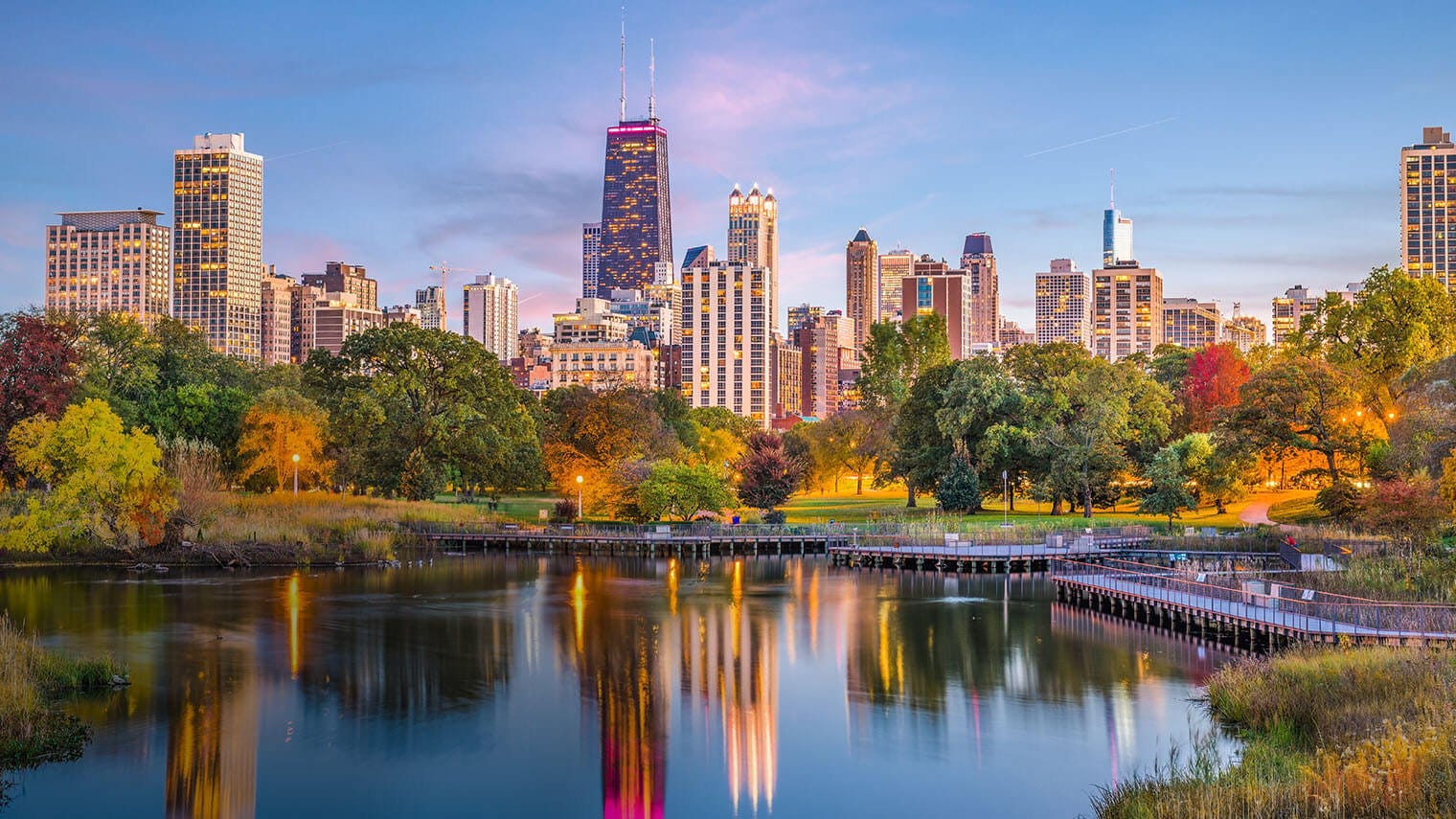
I have a longstanding infatuation with Chicago as a food city. I had some of my most formative fine dining meals there, always interesting if not always strictly good: Charlie Trotter’s, Alinea, Schwa, Moto. And if my tasting menu days aren’t fully behind me I’ll add Esme, Kasama and Oriole to that. Chicago has arguably been the most creative food city in America going back over 20 years. I’ve always thought that its midwestern, landlocked-ness lent itself to creativity as it can dodge some of the coastal tyranny of ‘local.’ If you want an oyster in Chicago or most fish, it’s not coming from a few miles away, everyone knows it, and that’s somehow freeing. On my first trip I took the famed architectural boat tour and you learn that rebirth and innovation is core to the DNA of the city, symbolized by the great fire of 1871 and the reversing of the flow of the Chicago River at the turn of the 20th century.
Clearly I’ve been thinking a lot about Chicago. Why? The fire and the river, I think, are metaphors for where the restaurant industry is today.
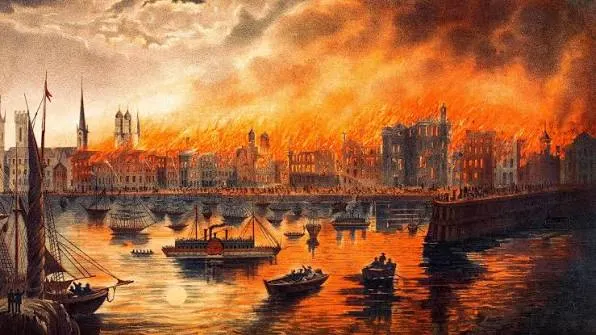
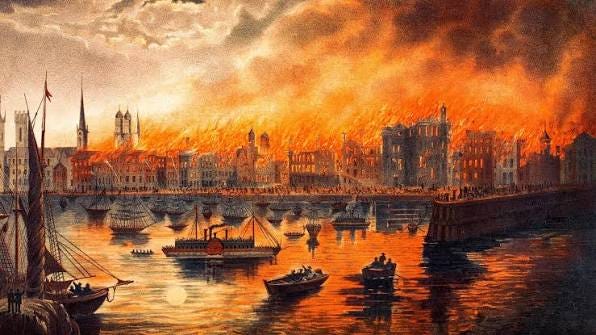
So let’s start with the fire. In 1871, Chicago burned because the city itself was built to burn. Wood streets, wood sidewalks, wood everything, stacked up over decades until a hot dry summer turned it all into fuel. The fire didn’t create the fragility. It revealed it. And what got rebuilt afterward was a fundamentally different city, one engineered in steel instead of timber. Standing on that boat, it’s easy to hear this as a story about architecture. Nobody in 1871 thought of wood as a liability. It was just how you built a city. The fragility wasn’t hidden in some dark corner. It was the streets, the sidewalks, the structure itself, so ordinary that no one saw it as fuel until it was burning. The restaurant industry just went through its own version of that fire, and its fragility was every bit as ordinary and every bit as invisible. The pandemic looked like the disaster, but it was really just the spark. The fuel had been accumulating for over a decade.
Let’s start with real estate. Ecommerce spent 15 years hollowing out brick-and-mortar retail, and as the storefronts emptied, restaurants became the default tenant on every block. If a space couldn’t be a record, book or shoe store with the rise of Spotify and Amazon, it became a restaurant. Landlords learned to treat food and beverage as the go-to fill, which meant more restaurants chasing the same finite pool of diners, all paying rent set by a market that no longer had anything else to put in the space.
If real estate is the most recent fuel, the next is the oldest and the heaviest. The restaurant industry was built, going back generations, on a labor model that ran on cheap hours, blurred boundaries, and a culture that too often treated abuse as the cost of the craft. The reckoning arrived more recently. When the Me Too movement reached the kitchen and the dining room, it revealed what a lot of people already knew from the inside: much of the industry’s biggest successes were held up by exploitation, and the charisma of the business had been doing a lot of work to hide it. Like the wood, none of this read as a liability while it was working. It was just how restaurants ran. But it was fuel all the same, and when it caught, it took real institutions and real reputations down with it.
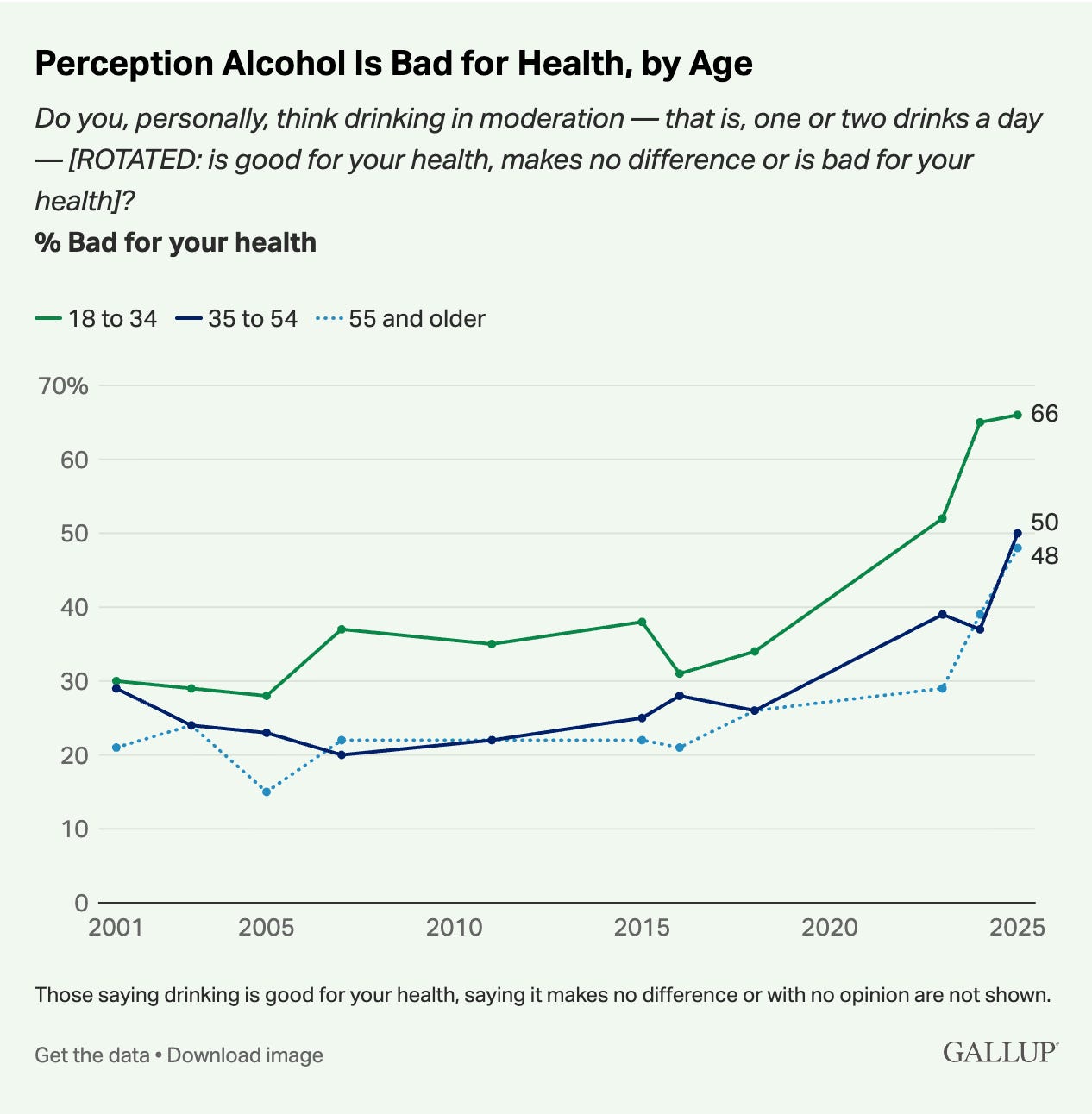
Then there’s the disappearing profit engine. Alcohol has always been the highest-margin thing a restaurant sells, the item that quietly subsidizes the labor of cooking and serving everything else. But Americans, and younger generations especially, are drinking less. When the most profitable line on the menu shrinks, it doesn’t just dent revenue. It removes the cushion that made the rest of the model survivable.
And all of this piled up against a backdrop of relentless economic instability. The last decade handed restaurants one destabilizing event after another (a recession hangover, an affordability crisis, a pandemic, supply chain breakdowns, tariffs, inflation outpacing what consumers actually earn, Trump-Biden-Trump, and the low hum of AI and automation anxiety looming). Any one of these would be a lot. Absorbing them back to back, on margins already thinning, is how a wooden city spends a decade drying out.
And then, just as the industry was trying to rebuild, a genuinely new pressure arrived. GLP-1s began doing something no restaurant had ever really had to plan for: shrinking appetites themselves. A category of drug that reduces how much people physically want to eat is a slow-moving headwind for an industry that sells exactly that. It’s early, and the full effect is still coming into focus, but the direction is not ambiguous.
Some of this fuel was financial and some of it was human, but it all did the same thing. It made the whole structure ready to catch.
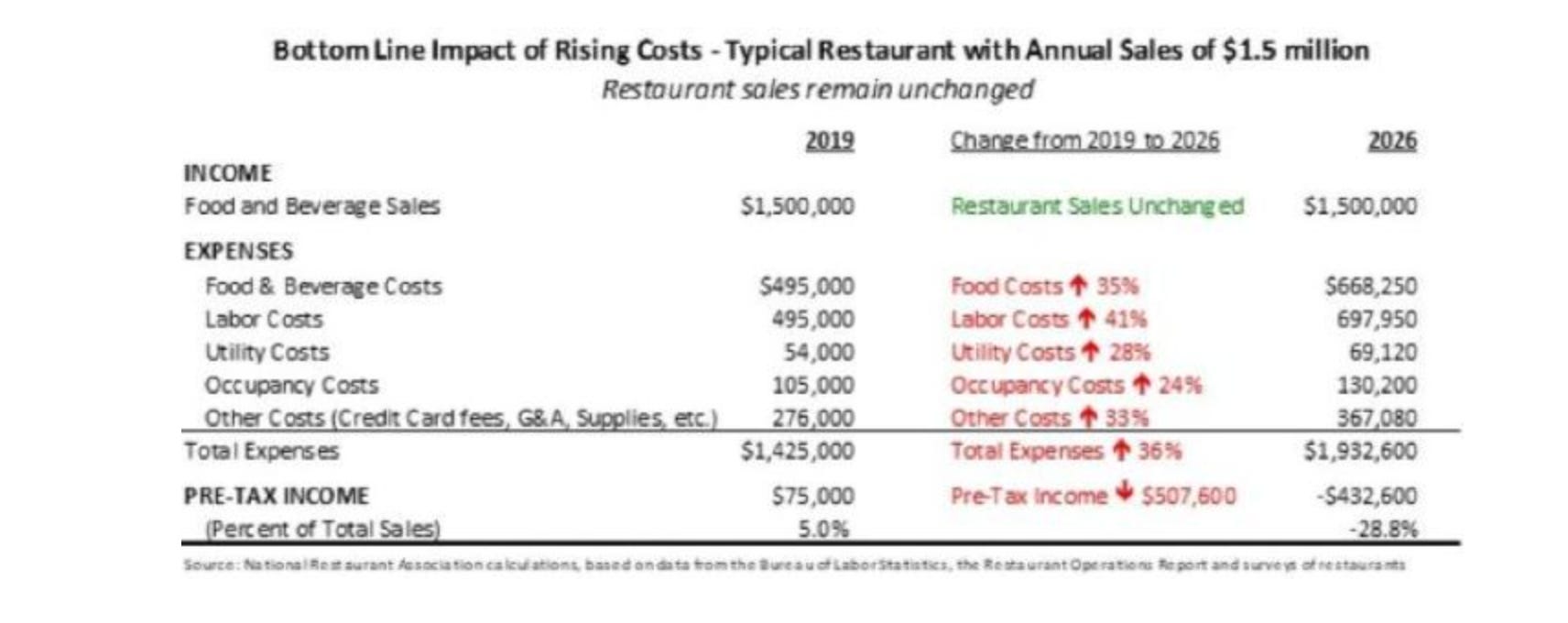
Put those together and you get the number that matters. Restaurant margins eroded from twelve to fifteen cents on the dollar down to three to five, long before anyone had heard the word coronavirus. So by the time the spark actually landed, the fire was already inevitable. Today 42 percent of full service restaurants in this country are unprofitable, with nearly half citing food and labor costs as the core challenge. The only question is what gets built afterward, and whether it repeats the same mistake or finally reverses the flow.
The fire and the river aren’t the same story. The steel and stone that rose from the ashes solved the obvious problem. The city could no longer burn to the ground overnight. But it took another three decades before Chicago confronted the less visible problem flowing alongside the new skyline: a river carrying the city’s waste straight into the lake it drank from. The fire was sudden and the fix was fast. The river was slow, and reversing it took an engineering feat of a different order entirely. Not rebuilding what burned, but changing the direction something had been flowing since before the fire ever started.
And here’s where the metaphor and the reality part ways, assuming I haven’t already lost you. Chicago rebuilt in steel and lived with its poisoned river for thirty years. A rebuilt city could function, even while drinking its own sewage. The restaurant industry doesn’t get that grace period. You cannot rebuild on a foundation where the profit drains out the moment it comes in. There’s nothing to build with. As important, in the absence of profit what is the incentive to rebuild at all? For restaurants, reversing the flow isn’t the second act you get to after the rebuild. It’s the precondition for the rebuild being worth anything at all.
Reversing a river is hard; it was one of the largest engineering efforts of its age, years of labor by people who might not reap the benefits of the clean water they were making possible. The operators being asked to rebuild the restaurant industry are exhausted. They survived the fire on fumes, and now to ask them to double down for an industry they’ve given so much to, often with little tangible in return, is a brutal, unfair thing to ask of anyone.
So where to begin? I keep coming back to arithmetic. A restaurant that can sustain the people who take the risk to open it, and the people who do the hard work inside it, needs to keep somewhere around twelve to fifteen cents on every dollar that comes through the door. Right now it keeps three to five. Somewhere along the way, ten cents on every dollar stopped staying with the restaurant and started just flowing through it it. Reversing the flow means finding those ten cents and routing them back.
So before we go looking for those ten cents, it helps to name everyone standing around the restaurant. Because a restaurant is never just an owner and a guest. It sits at the center of a crowded ecosystem. There are the owners, who take on the risk. The employees, who do the hard work inside. The guests, where every dollar begins. The landlords who own the room. The suppliers who fill the walk-in. The banks and investors who provide the capital. The tech and service companies who process the payments, take the reservations, and deliver the food. The cities and states who license, tax, and regulate. And the communities and neighborhoods that a restaurant helps hold together, and that in turn keep it alive.
That’s a lot of hands on one dollar. Almost every one of them is behaving rationally within a democratic, capitalist system. The landlord charging what the market will bear would argue they are fulfilling their obligations. As would the platform taking its percentage, or the supplier passing through a price increase, or the city adding a fee to a strained budget, or the diner hoping to pay a little less for a little more. Each of these is a reasonable act of self-interest. The trouble is what happens when you add them all up.
What all of these stakeholders share, whether they think about it this way or not, is a common resource: the basic viability of the restaurant industry as a place worth doing business. And this is where an old idea becomes useful. The tragedy of the commons describes what happens when many parties share a limited resource that no one is responsible for protecting. Each acts sensibly in their own interest, each takes a little more, and no single decision is unreasonable on its own. But the resource can’t regenerate as fast as it’s drawn down, and eventually it collapses for everyone.
That is what has happened to the restaurant’s ten cents. Here’s where it went across 6 stakeholders:
**Employees:** Labor costs in full service restaurants have risen 45 to 50 percent over the last ten years. To be very clear, we have to run restaurants efficiently, but wage growth should not “return” any of those gains.
**Guests:** One of the earliest articles I wrote explored what a halibut that cost $26 in 2005 should cost by 2023, based on inflation and real wage growth. It should cost $70 or more. It costs $45.
**Landlords:** Most leases have 2 to 3 percent rent growth baked in each year, in line with cost of living increases but more than a restaurant can bear as it compounds. The real issue as I see it is treating the restaurant tenant on the ground floor the same as the commercial tenants above under a triple-net lease. The white shoe law firm on floors 18 to 23 has different economics than the place serving them lunch on the first floor, but they each pay their proportionate share of real estate taxes and common area maintenance.
**Supply Chain:** Prices went up on supply chain shocks and tariff fears and never came back down to the levels prior. This has been true across food and beverage. Consolidation into fewer than a handful of big foodservice suppliers like Sysco, Performance Food Group, and US Foods (USF has been a great partner to Shy Bird but is part of the consolidation problem nonetheless) limits any negotiating leverage.
**City & State Governments:** Cities use real estate taxes to fund budgets and, at least in theory, to keep the city functioning and affordable. A building we occupy with a Shy Bird was deemed to be worth X at lease signing just a couple years ago and is now 2X, as are our real estate taxes. I am not against these tax increases, but taken with the landlord-tenant relationship above, it’s unsustainable.
**Technology Service Providers:** This one is perhaps the hardest to swallow, as their products ostensibly exist to make running a restaurant easier and more profitable. Odd, then, that the more products that exist, the lower profitability has gotten. This category has the added challenge of often being venture backed, where the expectation of exponential returns makes the imperative to drive take rates higher even more intense.
A penny from five of these six, leaving employees whole, gets us halfway back to the ten cents. That is not a revolution. It is a penny. And the case for it is already sitting in my inbox. In a single month this summer, I received marketing materials for more than thirty thousand square feet of vacant restaurant space, some of it empty for years. Every one of those dark spaces is a landlord collecting nothing, a city taxing nothing, a supplier shipping nothing, a software company selling nothing. I wonder if the penny is actually the less expensive option for most stakeholders.
The song goes:
...when I’m back in Chicago, I feel it
Another version of me, I was in it
I wave goodbye to the end of beginning
In 1871 a third of Chicago burned. A city of wood was rebuilt with steel and stone to become the birthplace of the skyscraper, but that was just the end of the beginning. By the turn of the century they reversed the flow of the river to ensure the health of the people. The fire and the river speak to me, and hopefully you too if you made it this far, as metaphors for where the restaurant industry is in 2026. We built our city of wood and a confluence of forces created a tinderbox that the pandemic set ablaze. In order to build back stronger and more resilient we must reverse the flow of profit away from the industry or else those tasked with doing the building will make the only rational decision available to them...walk away. When that happens, everyone loses.