
A viral research note says AI will crater the economy. What if it just builds a different one?
Two days after Citrini Research published their "2028 Global Intelligence Crisis," Jack Dorsey laid off more than 4,000 people at Block. Nearly half the entire workforce, gone in an afternoon. "Intelligence tools have changed what it means to build and run a company," he wrote. The stock jumped 24%. A standing ovation from the market while thousands of people figure out what to tell their families at dinner.
Dorsey said most companies will follow within a year. I believe him.
Citrini's thesis is that AI eats white-collar jobs, companies get leaner, displaced workers stop spending, and the economy contracts. It is rigorous and speculative in equal measure, except for the part where it keeps coming true before the ink is dry.
What happened at Block confirmed it. But where Citrini lost me is what comes next, which is essentially resigned defeat. The humans in their model lose their jobs and just… stop.
It's a strange thing to write so intelligently about technology trends and so unimaginatively about human existence.
Citrini calls the human elements of the economy "friction" — the middlemen, the layers of people standing between a desire and its fulfillment. They see waste to be automated away. I think AI is about to reveal that friction, in some cases, was the product all along.
When intelligence becomes abundant and cheap and always on, what becomes rare is everything intelligence can't provide: presence, craft, the feeling of being seen by someone who is actually in the room with you, having interactions with people who actually give a damn. That's not waste. That's the origin of a new economy.
This has happened before, and the pattern is consistent enough to be predictive.
In the 1760s, the first textile mills in England began mechanizing production. By the 1880s, William Morris had launched the Arts and Crafts movement in direct response: potters, printers, and furniture makers deliberately leaving marks visible in their work, turning the evidence of human hands into a selling point. "It is allowing machines to be our masters and not our servants," Morris wrote, "that so injures the beauty of life nowadays." The movement spawned guilds, workshops, and retail economies across England, and spread from London to New York to Tokyo.
In 1913, Ford's assembly line made consumer goods identical and abundant. By the late 1960s, over a million Americans had abandoned the suburbs for back-to-the-land communes, and Stewart Brand's Whole Earth Catalog, subtitled "Access to Tools," sold 1.5 million copies to a generation that wanted to find a loom, build a geodesic dome, or learn to keep bees. The counterculture didn't reject technology, but it rejected the idea that efficiency was the point. And it built things: food co-ops, organic farms, the entire natural foods supply chain that became a $300 billion global market. Whole Foods started as a single Austin storefront in 1980, founded by a college dropout who'd been living in a vegetarian co-op.
In the 1990s, the internet put a screen between every human interaction. By the 2010s, what a pair of economists had dubbed "the experience economy" was no longer a theory, it was how millennials chose to spend their money. That shift created entire job categories that didn't exist a generation earlier — Airbnb hosts, yoga instructors, craft breweries, escape room designers, and pop-up chefs.
Every time a technology commoditizes one form of value, humans migrate toward whatever's left that feels threatened. It's closer to an immune response, and the time between technology innovation and human scarcity response keeps getting shorter. Every time automation eliminates one category of work, it creates demand for another. The kind that can only be done by a person, in a place, with intention. And every time, the new economy starts small enough that the people still measuring the old one don't see it coming.
I live in Portland, Maine, a small city on a peninsula where the next version of this is already taking shape. The economy here runs on something that would make a McKinsey consultant’s eye twitch. It runs on friction.
On a Friday morning, you will get coffee from a local shop where there's still a bulletin board by the door pinned with business cards from local contractors and yoga studios (and somebody's lost cat). Drive twenty minutes to a farmhouse in Buxton for a five-course dinner where the chef is eager to impress the locals who keep her business open through the winter. End up at a restaurant later that weekend that seats thirty, where the pasta is hand-milled with local grains because the chef believes you can taste the difference. He's right.
None of this scales. And Portland's food economy keeps expanding anyway — pop-ups becoming permanent, chefs launching dinner series in barns and decommissioned kitchens. People move here for it. Tourists fly across the country for it. Half the people running these places came from somewhere else. They had corporate jobs or tech jobs or no particular plan, just enough savings and a bet that the thing they wanted to build was the thing other people wanted to find. The demand for something made by a person, in a place, with care, is accelerating. And so is the supply of people ready to make it.
Portland is not special. Or rather, it's special in the way that the Hudson Valley is special, and Charleston is special, and Asheville is special. It's one example in a larger pattern that's been quietly growing across the country, in small cities and the neighborhoods that ring every major metro, wherever people have decided that 'small' and 'rooted' beats 'frictionless' and 'fast'.
Of all the friction businesses growing in places like these, one stands apart.
My bet is restaurants. Not a side dish to whatever comes next, but the main course.
Most social infrastructure in the physical world has disappeared over the past thirty years. The cultural centers, the bowling leagues, the YMCAs, and the church socials — the physical spaces where people used to show up and be in community with each other are gone. And now the workplace, the last place most Americans reliably saw other human beings five days a week (albeit virtually), is being hollowed out too.
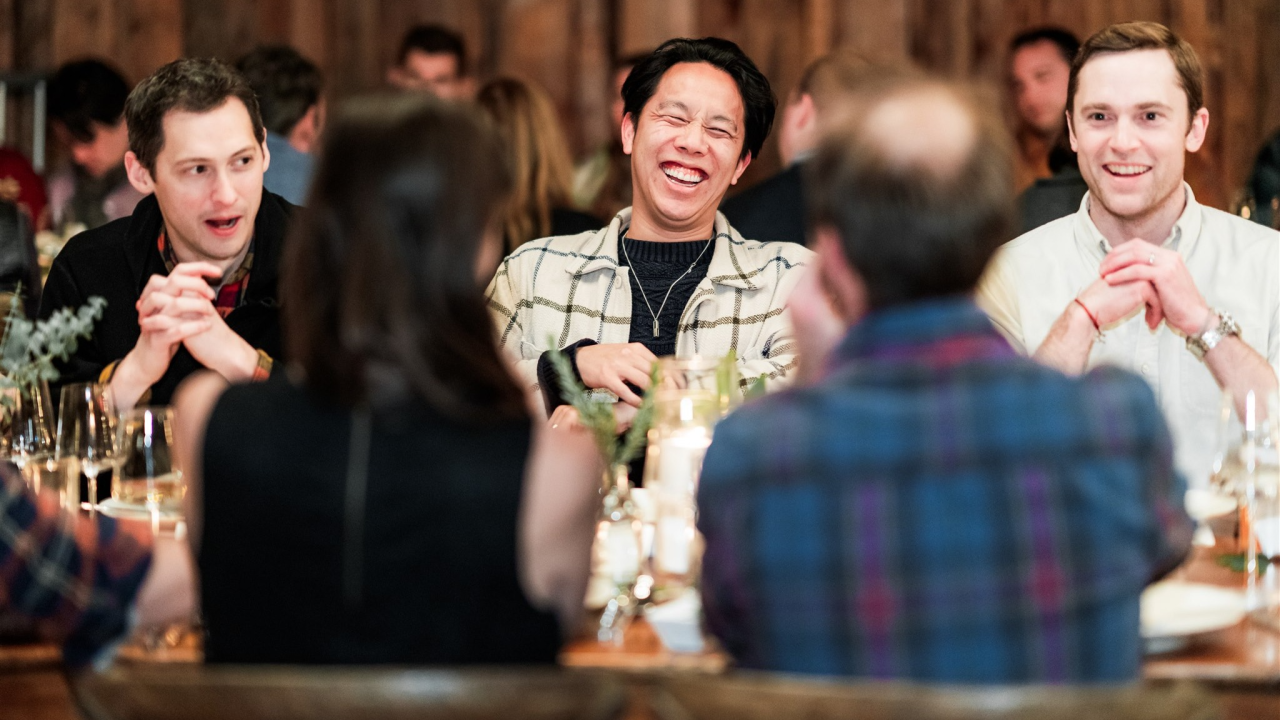
Bookstores, farmers markets, barbershops — those are friction businesses too. But a restaurant is the only one that combines all of it at once: craft, service, community, and place, happening simultaneously in real time. You're not browsing or transacting. You're being fed by someone, in a room full of people who chose to be there, in a neighborhood that shapes what's on the plate. Restaurants are the last standing version of social infrastructure that does all of those things in the same building on the same night.
That's the product. Not the food, but the restaurant itself. The server who tells you what's good tonight and means it, the room that's loud because everyone in it chose to be there. Every human element that makes a restaurant inefficient is also the element that makes it irreplaceable. The economics of running a restaurant are brutal and the fact that the best ones survive anyway is the strongest evidence that what they offer can't be captured on a spreadsheet.
Every wave of automation in this industry (i.e. fast food, meal kits, delivery apps) was supposed to kill the independent restaurant. Instead the best ones got harder to book, because everything around them got cheaper and faster and they stayed exactly what they were: human.
The friction economy doesn't just need customers. It needs builders and entrepreneurs. And the four thousand people who walked out of Block last week aren't all going to become line cooks. But some of them are going to open the restaurant. Or the natural wine shop next door, or the mobile sauna down the street, or the small bookkeeping practice that serves ten of these businesses instead of one corporation. A white-collar workforce with severance checks, transferable skills, and suddenly nothing to lose is exactly how new economies get built.
This is going to be a tough couple of years. Not everyone who loses a white-collar job is going to land gracefully in the friction economy. What Dorsey did last week is the kind of rapid displacement that leaves real wreckage. And the version of this future that keeps me up at night is the one where friction becomes a class marker — where the in-person dining experience and the act of slowing down are luxury goods that only the affluent get to enjoy. Portland and Charleston and the Hudson Valley are already expensive.
But I'm optimistic that it ends somewhere more interesting. The people getting pushed out of corporate jobs right now have skills, savings, and no particular loyalty to the system that just cut them loose. And if enough of them build in enough different places — not just the coasts, not just the curated small cities — the friction economy has a shot at being something more accessible than a premium tier.
Citrini asks: What if our AI bullishness is actually bearish?
I'd ask it differently: What if displacement is the catalyst for a more human economy?
Not because it'll be easy, but because that chef in Portland milling pasta with local grains in a kitchen the size of a closet isn't an anachronism. He's a leading indicator. And somewhere right now, someone who got walked out of an office last week is about to become the next one.